The Herndon Historical Society HerndonHistoricalSociety@gmail.com Headquartered in the historic Herndon Depot Museum. Mailing address:Street address: PO Box 99 717 Lynn Street Herndon, Virginia Herndon, Virginia
Herndon Depot, circa 1905 - From the J. Berkley Green Collection of the Herndon Historical Society - - - 717 Lynn Street, Herndon, Virginia 20170
Please visit our Herndon Depot Museum at 717 Lynn Street.
We look forward to seeing you!
The Herndon Historical Society Museum is open every Sunday from noon until 3PM March through mid-December. If you are interested in volunteering on Sundays, please contact Society President Jim Cudlip at HerndonHistoricalSociety@gmail.com. The only requirements are an interest in local history and a willingness to help out.
Click here to see Herndon Historical Society's Historic Home Plaque Registry Walking Tour Sites complete with historical descriptions.
Clickhereto read local articles about Herndon on theHerndon Patchwebsite. All articles can also be found on the Herndon History Articles page; "click on the "Herndon History Articles" link in the lefthand column.
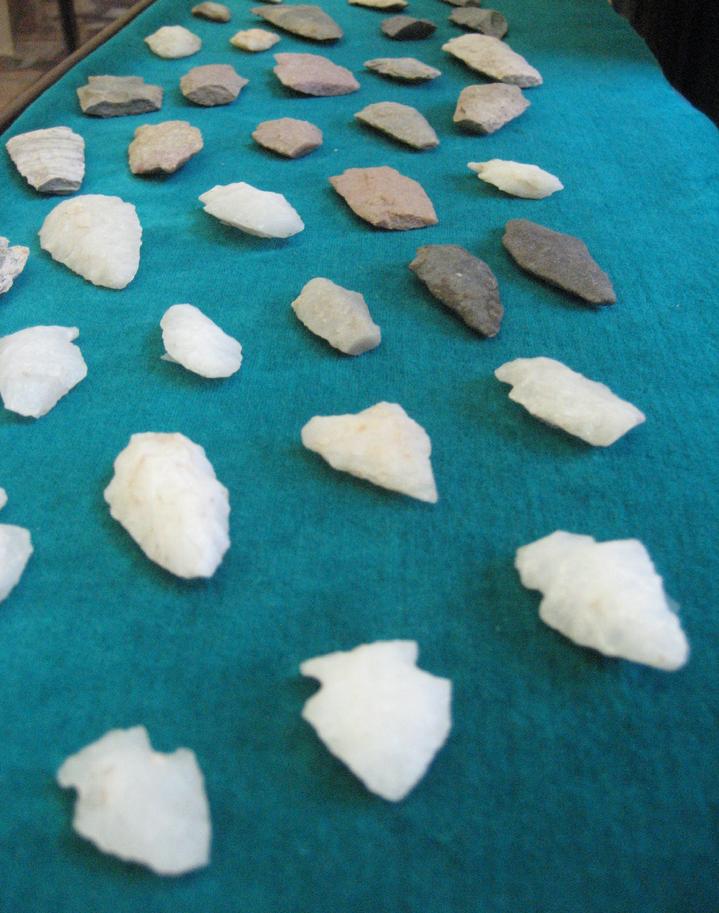
Part of an arrowhead collection in the Herndon Depot Museum. (Barbara Glakas)
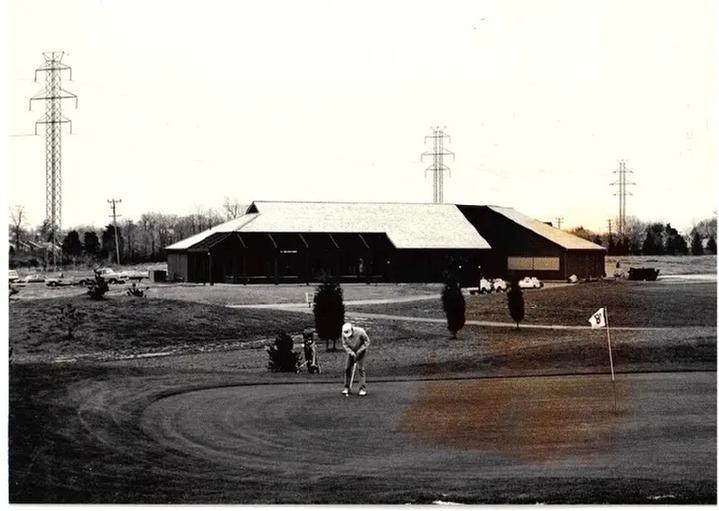
Herndon's Centennial Golf Course, c. 1979-80. (Herndon golf course staff)
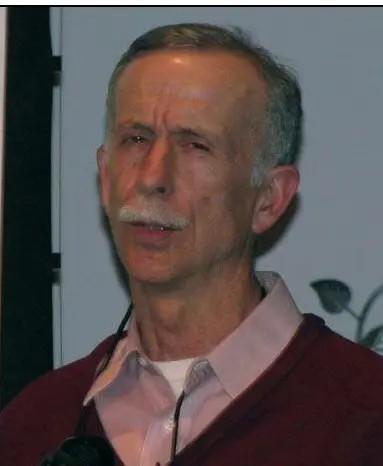
Mike Johnson, Fairfax County archeologist. (nvcasv.org newsletter, 2008).
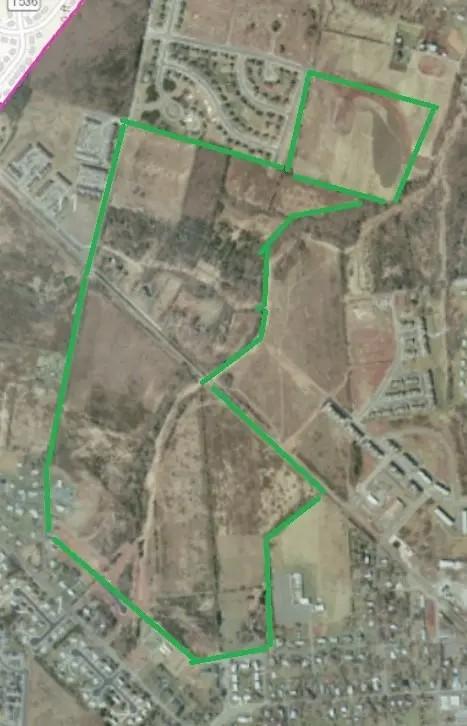
1976 Aerial photo of the golf course & Clearwater Elementary School areas. (Fairfax County GIS).
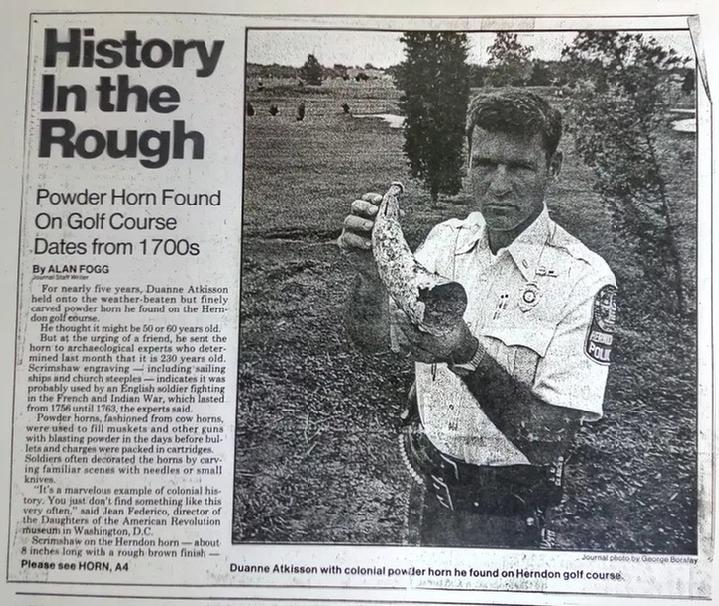
Old newspaper photo showing Duanne Atkisson and the powder horn he found. (Herndon Observer).
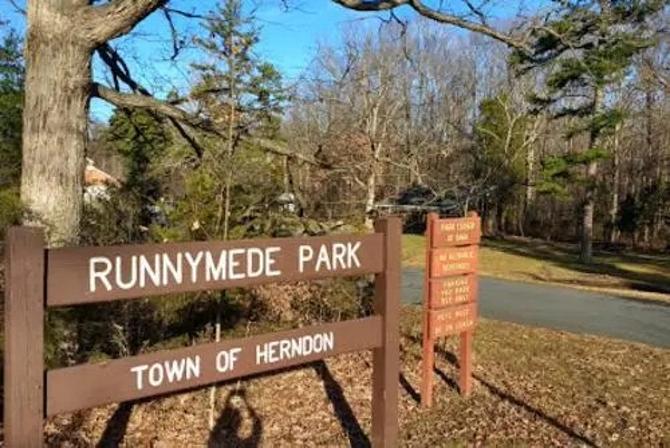
Runnymede Park entrance sign. (Visit Fairfax).
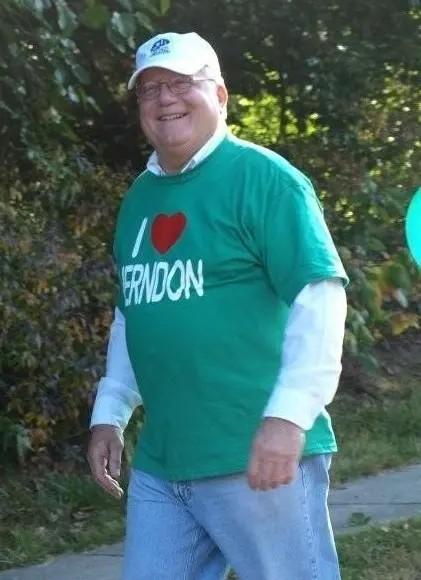
Herndon High School teacher, Gary Gepford. (Herndon High School).
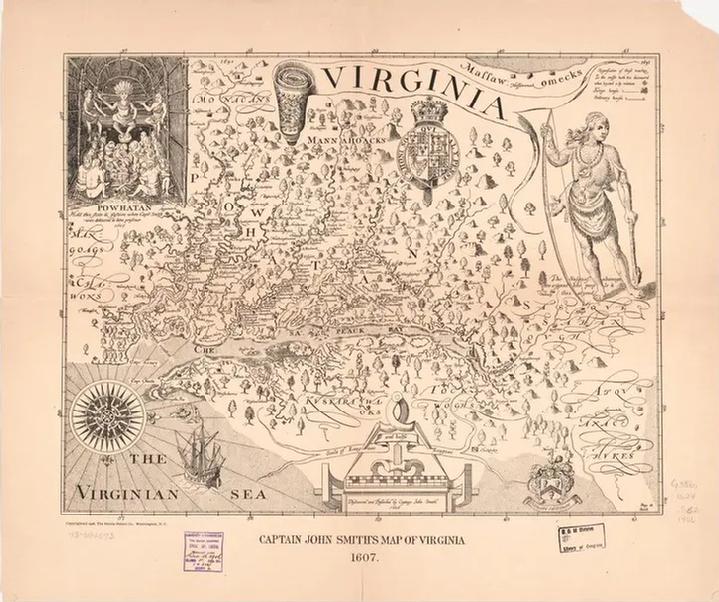
John Smith's 1607 map of Virginia. (Library of Congress).
The Herndon Historical Society was founded in 1971. Its purpose, as stated in the Society's constitution, is “…to bring together those people interested in history, and especially in the history of the Herndon, Virginia, area.”
The Society established a museum in conjunction with the Town’s centennial celebration in 1979. The museum, which is open from noon to 3PM on Sundays March through mid-December, is located in Herndon’s historic train depot adjacent to the WO&D trail in the heart of the downtown. The museum contains an array of materials and collectables that illustrate the life, conditions, events, and activities of Herndon and the surrounding area.
When We Meet
The museum is the location for Historical Society meetings and for other special functions. The Society holds meetings three times per year—on the 4th Wednesday in January, May, and September. The meetings, which are free and open to the public, feature guest speakers—including authors, journalists and historians—who focus on topics of local historical interest. For information about meeting dates, times, and topics contact Society President Jim Cudlip, HerndonHistoricalSociety@gmail.com.
Clickhere to see the Herndon Historical Society's Newletters and Meeting Minutes.
What We Do
The Society is involved in many activities beyond maintaining the museum. For example:
• The Depot
The Herndon Historical Society maintains a museum in the Herndon Depot in downtown Herndon on Lynn Street. Although the Town of Herndon owns the depot, the Historical Society has from time to time expended funds to help maintain it. The most recent project was the restoration of the original railroad semaphore that is fixed on the depot roof.
• Historic Homes Registry
The Society sponsors the historic home registry program designed to increase public awareness of Herndon’s older homes and buildings and their contribution to the Town’s distinctive character and spirit. Once an owner documents the history of the home and demonstrates that it satisfies certain criteria—such as the original structure being 50 or more years old and compatible with the character of Herndon, as well as being of historical or architectural significance to the Town—the application is approved and a request for a resolution is submitted to the Herndon Town Council. Once the resolution, which certifies the historic significance of the structure, is adopted, the structure is eligible to receive a plaque. All documentation becomes part of the Society’s research library, and a picture and brief history are placed on the Historical Society’s website. Click here for more information about applying for the Registry.
• The Caboose
In 1989, longtime Society member and railroad aficianado George Moore located a surplus Norfolk and Western caboose, arranged for it to be transported to Herndon, and coordinated with the Herndon Department of Public Works to install the section of track on which it sits. Located adjacent to the W&OD trail—formerly the W&OD railroad line—the caboose serves as a reminder of the town’s rail history. Although the caboose is now the property of the Town of Herndon the Society continues to monitor its condition and to fund the interior maintenance. Following his death in 2003, the caboose was dedicated in George’s memory. In 2008, the interior was restored and the windows were improved to make them water tight.
• Annual Model Train Show
Each December, usually the second weekend, the Herndon Historical Society, along with the Herndon Chamber of Commerce, sponsors an Annual Model Train Show and Caboose/Depot Open House. The event is held at the Depot, Caboose and the Herndon Municipal Center - - Features HO, N and O gauge model trains.
• The GasHouseMiniPark
In 1999, the Historical Society funded restoration and improvements at the gas generating facility located across from Herndon’s MunicipalCenter. Improvements included a display that explains how the facility operated, along with landscaping for the mini-park that surrounds it. The park is dedicated in memory of former Society president Larry Clarity, and the benches it contains were donated in memory of another longtime member, Bill Moffett.
• And More…
The Society continues to engage in educational and preservation-oriented activities designed to ensure that the public remains interested in and aware of the history of the Herndon area. For example, Society members were actively involved in working with the Town to ensure that the historic “yellow house” was relocated from behind Adams Green Funeral Home to a new site at the corner of Oak and Pearl Streets and made available for sale when it was slated for demolition.
A BRIEF HISTORY OF HERNDON
The Town of Herndon is situated on land that was originally patented to Robert King Carter, Jr. and Thomas Barnes. Most of Herndon was included in the Carter patent, while Barnes held a small portion of property along the Loudoun County line. Both patents can be traced to Charles II.
Five and one-half million acres were patented to Thomas, 1st Lord of Culpeper. This included all of Fairfax and Loudoun counties. A portion of the land can be traced through Lord Fairfax to the Carter and Barnes land. (For details see "Herndon, the Land: 1649-1900," by Donald Levine. Copies are located in the Depot Museum, the Herndon Fortnightly Library, and the Virginia Room of the Fairfax City Library.)
In the early days, this area consisted of a collection of farms. The railroad arrived in about 1857, and the railroad station became a center of the community. Businesses sprang up around the station, attracted by the ready access to transportation.
In 1858, it was determined that a U.S. Post Office would be appropriate at this location. Meetings were held so area residents could select a slate of names to be presented for consideration. Local family names were suggested and, for a variety of reasons, rejected by the Postmaster General.
More meetings were held. Local legend holds that a stranger stood up at one of those meetings and proposed the name of William Lewis Herndon. Captain Herndon, a native of Fredericksburg, Virginia, was a noted seafarer and an explorer of oceans and other waterways. He became a hero as the result of a well-publicized disaster at sea off the coast of the Carolinas in 1857.
Herndon was in command of the steamer Central America, which ran the New York-Panama route, the sea route of the Gold Rush 49ers. Steaming north on that ill-fated journey, the ship encountered a hurricane off Cape Hatteras and sank. She carried 575 passengers and crew, and a reported two to three million dollars in gold. The women and children and a few men who manned the lifeboats survived, but Captain Herndon and 425 other men were lost. The stranger at that long-ago meeting is believed to have been one of the male survivors.
However it actually came to be suggested, the name Herndon was presented and approved. In 1859, the Herndon Post Office was established. During the next 20 years, the community--both business and residential--grew slowly. There was a lull during the Civil War, when the railroad was partially destroyed.
On January 14, 1879, the Commonwealth of Virginia approved a charter and Herndon became an incorporated town. Herndon was then, as it is today, about four and one-third miles square, with the Depot roughly at its center. The town government was to be a council of seven, elected annually. The mayor was to be elected from and by the council, also for a term of one year.
The town's growth was modest into the 1900s. Dairy farming thrived, as the railroad provided an efficient method of transporting the milk to the processors (creameries) and distributors.
Passenger trains provided transportation for those who worked in Washington. In addition, the rail line provided a comfortable means of travel for Washington residents to travel to the resort towns--including Herndon--along the line. These city dwellers came to escape the Washington summers and to enjoy the fresh country air.
The railroad continued to provide the backbone for the area for many years. Inevitably, however, changes began to occur that would dictate the end of the railroad's importance. Roads were steadily improved, and trucks and automobiles became more dependable. A commuter could drive to work; a milk truck could pick up milk from a farmer's barnyard; and a delivery truck could bring the merchant's goods to his door.
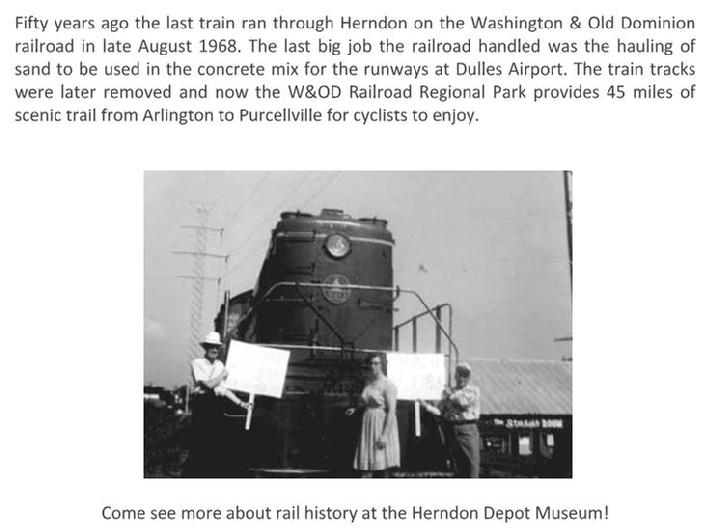
The last big job the railroad handled was the hauling of sand to be used in the concrete mix for the runways at Dulles Airport. The last train ran through Herndon in August 1968.
Herndon is no longer a small, out-of-the way farming village, and Washington, once a distant 20.9 miles away, is now little more than a 20-minute drive on the Dulles Toll Road.
HOW TO JOIN Membership dues are $20 per calendar year. Make checks payable to Herndon Historical Society and mail to: Treasurer, Herndon Historical Society, P.O. Box 99, Herndon, VA 20172. Be sure to include your name, address, phone number, and e-mail address with your check. If you are interested in becoming a member please download the form below and either mail it to us or bring it when you attend a meeting.
Or, if you wish to pay by credit card, send an email to the Herndon Historical Society (herndonhistoricalsociety@gmail.com) indicating which membership level or donation amount you would like to make, and the Society will email you an invoice which you may pay online using a credit card.
MEETING SCHEDULE The Society meets in the Depot on the fourth Wednesday in September, January, and May. Meetings begin at 7:00 p.m. and are open to the public.
OFFICERS & BOARD OF DIRECTORS Jim Cudlip, President: HerndonHistoricalSociety@gmail.com Nancy Saunders, Vice President James Rice, Treasurer Heather Parks, Secretary Kathy Gaynor, Director Barbara Glakas, Director Todd Parks, Director James Rice, Director Joe Fioramonti, Director Brian Evans, Director